Here's how to tell if you've got them, what's really happening when the top of an upstairs wall goes damp, what removal and rebuild involves, and how the alternatives compare. We carry out this work across Dorset, Hampshire and Somerset.
How to tell whether you have Finlock
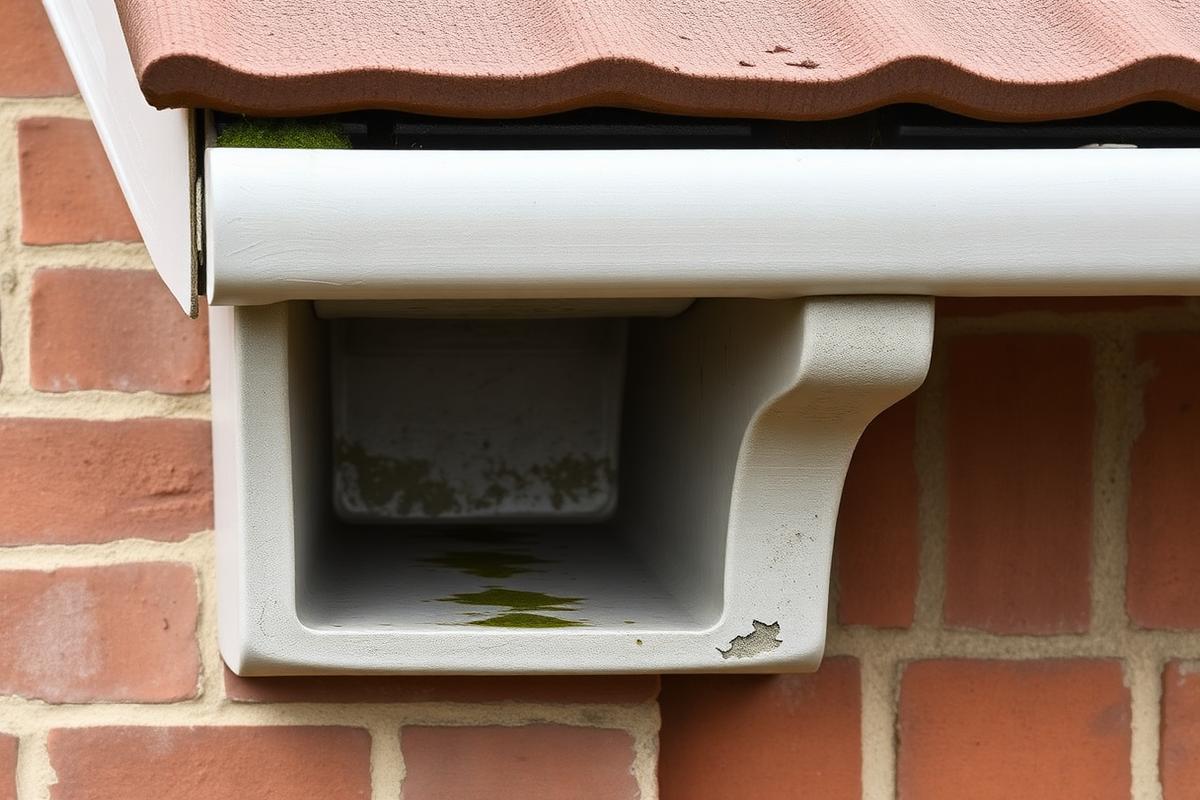
- The gutter is deep, square and unmistakably concrete rather than plastic or metal
- It sits as part of the wall instead of hanging on brackets below the tiles
- A joint line repeats every few feet along its length
- Upstairs walls feel cold in a band just below the ceiling
- Mould reappears in bedroom ceiling corners however often it is cleaned
- Wallpaper or paint blisters along the top of the wall through winter
Why Finlock gutters cause damp indoors
There are usually two things going on, sometimes together. Water can get in through worn joints, a failed lining or cracks in the concrete and track into the wall. Separately, the solid concrete forms a cold bridge, so the upper wall inside stays colder than everything around it — and moisture in the air condenses on it.
That's why the damp shows as a band along the top of the wall rather than a patch, and why it's often worse in a cold dry spell than after heavy rain. It's also why ventilating the room and redecorating eases the symptoms without ever solving the actual problem.
- 1Finlock concrete trough spanning the wall head
- 2Rain reaches the gutter from above
- 3Water can enter through joints or defects in the concrete
- 4Thermal bridge — the concrete chills the upper internal wall
- 5Cold band forms on the internal wall
- 6Condensation and mould can follow
What removal and rebuild involves
We scaffold and protect the elevation, cut out the concrete units, and rebuild the wall head in timber with insulation set in to break the cold bridge. The roof edge is made good, the underlay taken over a drip into the new gutter, and a new fascia, vented soffit and rainwater system fitted and falled to the outlets.
It's structural work at the wall head rather than a simple gutter swap, and it needs pricing and planning as such. Most houses take a few days per elevation once the scaffold's up.
Existing Finlock
The concrete trough built into the wall head, with joints starting to open up.
Removal & rebuild
Blocks cut out, eaves rebuilt in timber, and the wall head insulated properly.
New roofline
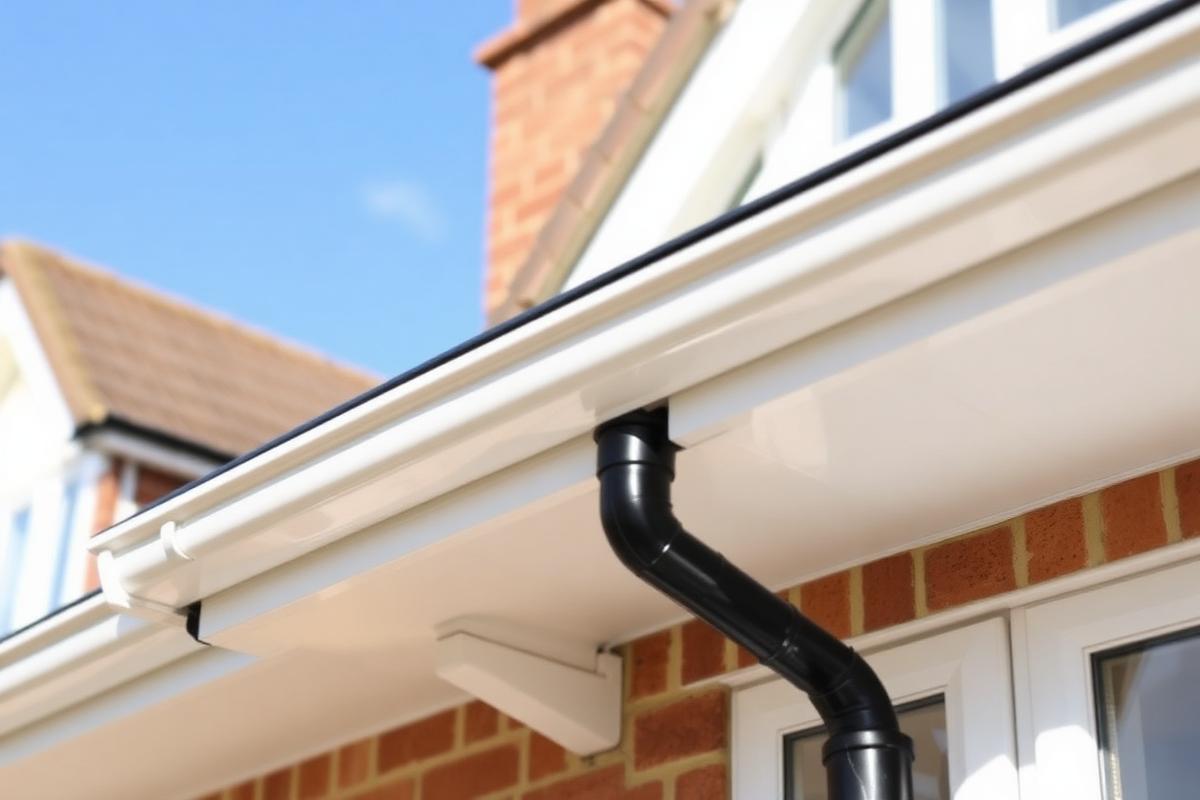
New fascia, soffit and guttering, falling correctly to the outlets.
Removal, lining or overfitting — compared honestly
Lining may address leakage for less money, but it leaves the concrete and its thermal bridge in place. Overfitting a plastic gutter can manage rainwater without removing the block. Removal may be considered where the wider eaves construction and cold bridge warrant it.
Where the units are heavily built in, full removal isn't always automatically the right call either — cutting them out can disturb the eaves and wall head. We look at each property individually and set out what each option really solves before quoting.
Repair
Seals a joint and buys some time, but the cold bridge and the damp are still there underneath.
Line
Stops water getting in for less money, but every liner has a service life and will need doing again.
Remove & replace
Ventilation and redecoration can ease the symptoms, but they won't remove the thermal bridge or fix water getting in. What's right depends on the condition of the Finlock system and how it's built.
What happens to the inside wall afterwards
Fixing the cause doesn't dry the wall overnight. A wall that's been soaking up water for years takes months to dry out, so it's best to leave decorating until it has. Where the plaster's broken down or mould's taken hold, those finishes will need making good and treating.
We're upfront about where our work stops, so you can plan the internal repairs rather than being caught out by them.
Cost, phasing and doing it with other work
Price is driven by the length of the run, scaffold access and what we find at the wall head — not by the gutter alone. Work can be phased elevation by elevation, starting with the side taking the worst weather, and we detail any stop end so it stays watertight until the rest follows.
If the roof covering's due anyway, it's worth doing both together. The scaffold and the eaves work overlap a lot, and doing them separately means paying twice for the same access.
Common questions
A few things homeowners often ask us about finlock concrete gutter removal before booking a survey or quote.
Ask us anything