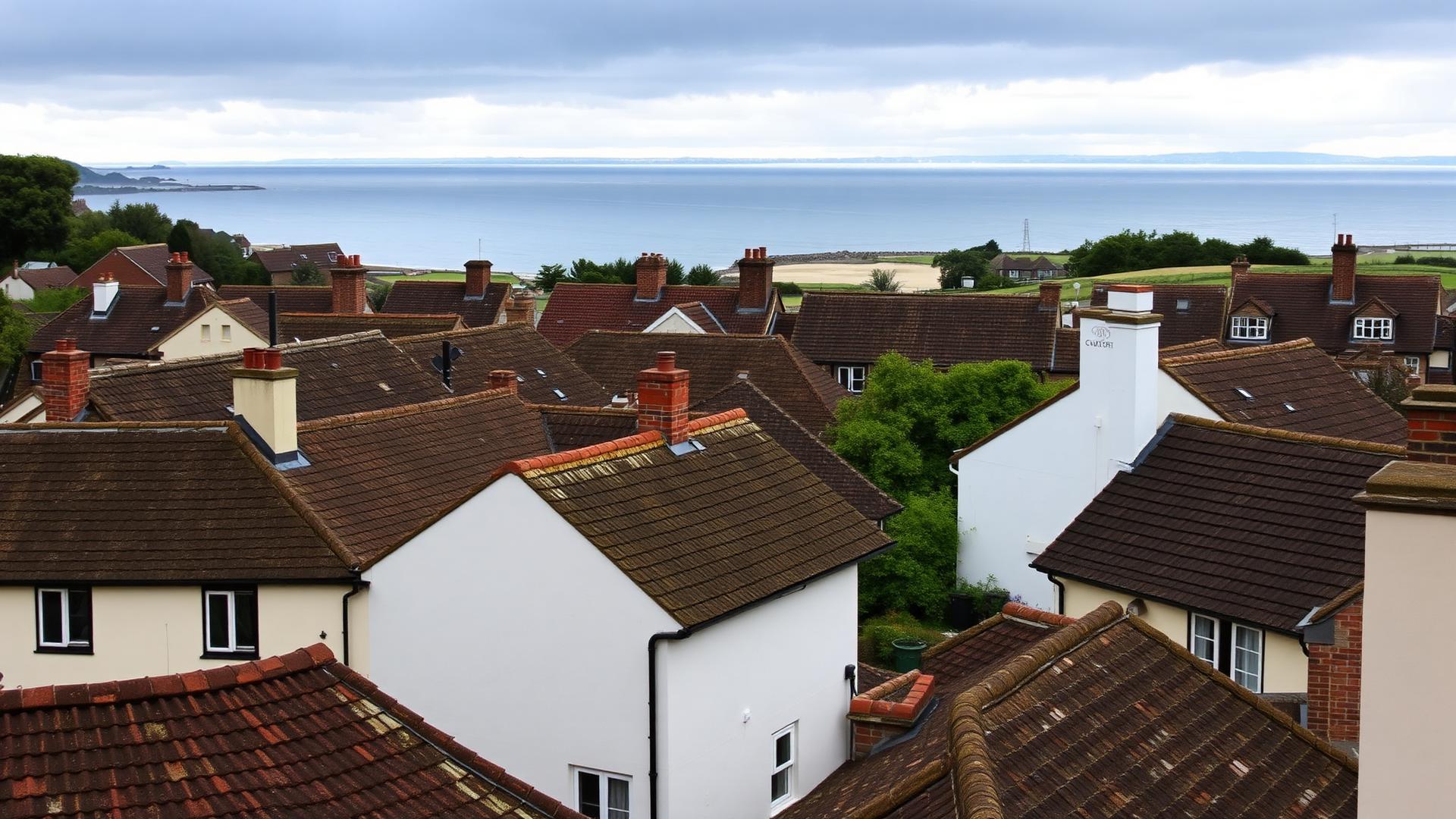
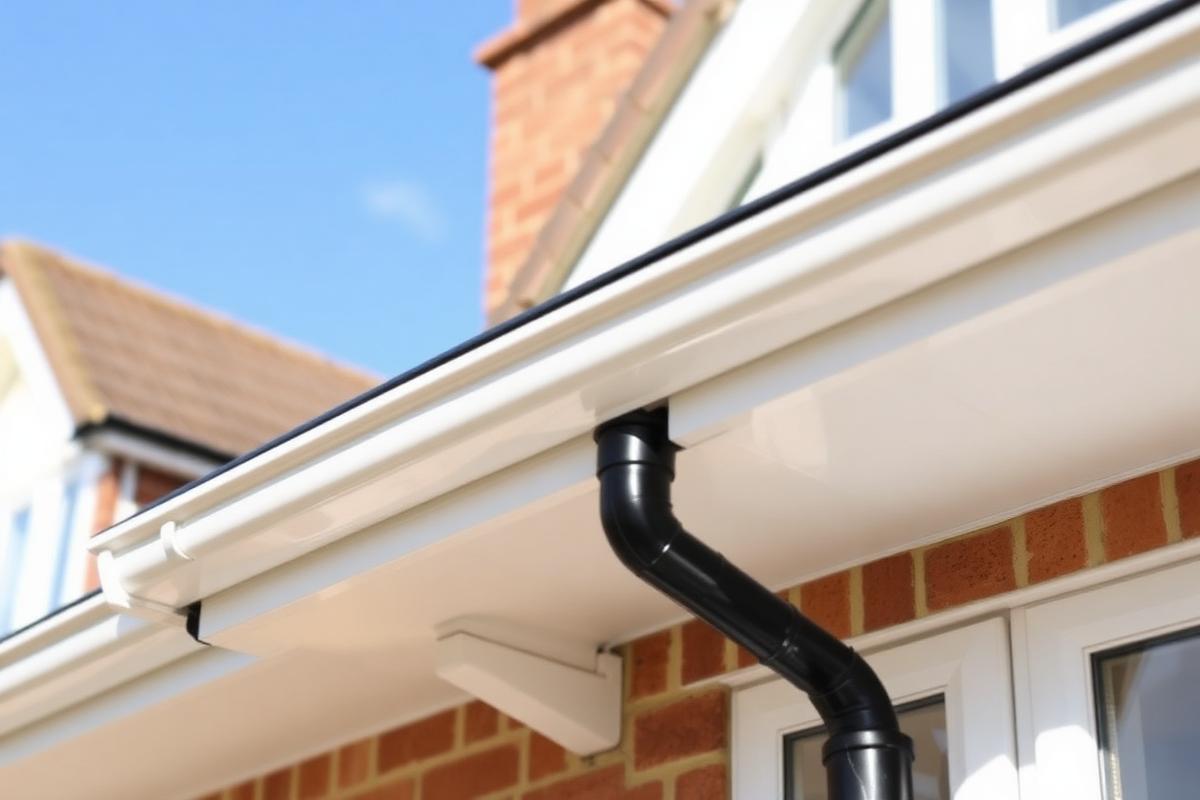
That matters, because upstairs damp in a let property gets blamed on drying washing and closed windows far too often, when the real cause is built into the wall head.
Is it the gutters, or is it condensation?
- A deep concrete edge at the eaves rather than a gutter on brackets
- Damp forming as a band along the top of the wall, not around windows
- Mould in ceiling corners on the outside wall only, not on internal walls
- A cold strip along the wall head you can feel by hand in winter
- Cracking or rust staining on the concrete face outside
- Damp that gets worse in cold spells rather than only after heavy rain
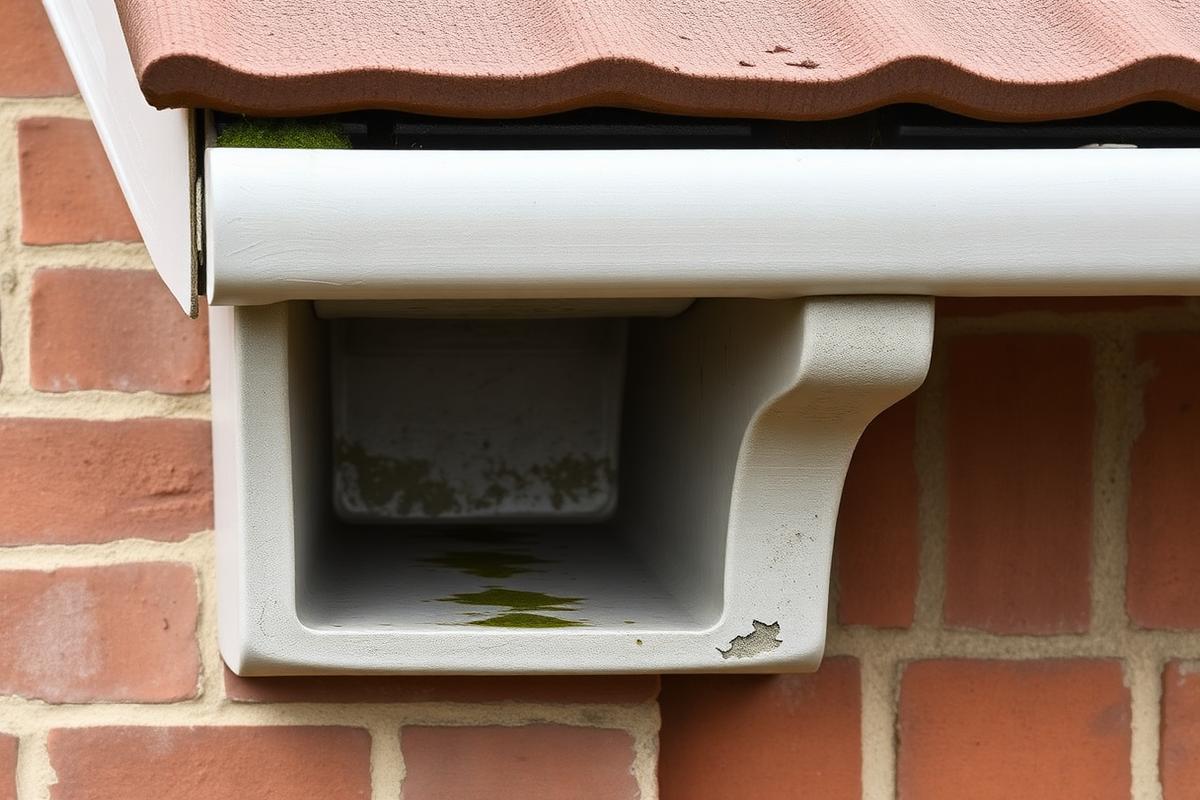
Why the damp keeps coming back
Water can get in through open joints, a perished lining or defects in the concrete, and track into the wall construction. Separately, the concrete forms a cold bridge across the wall head, so the inside surface stays colder than everything around it and indoor moisture condenses there first.
That's why better ventilation and repeated redecoration only ever help so much in these houses. They reduce the moisture available, but they don't warm the cold surface or close off the water path.
- 1Finlock concrete trough spanning the wall head
- 2Rain reaches the gutter from above
- 3Water can enter through joints or defects in the concrete
- 4Thermal bridge — the concrete chills the upper internal wall
- 5Cold band forms on the internal wall
- 6Condensation and mould can follow
What removal and rebuild involves
We scaffold the elevation, cut the concrete out, and rebuild the eaves in timber with insulation at the wall head. New fascia and vented soffit follow, then conventional guttering hung at the right fall, with the roof edge and underlay dressed over a drip into it.
Around Winton and Charminster the tree cover is heavy, so we size the outlets sensibly and fit hopper or leaf protection where a run sits under limes or sycamores — a Finlock trough under a tree line blocks and overflows long before it ever cracks.
Existing Finlock
The concrete trough built into the wall head, with joints starting to open up.
Removal & rebuild
Blocks cut out, eaves rebuilt in timber, and the wall head insulated properly.
New roofline
New fascia, soffit and guttering, falling correctly to the outlets.
Lining, overfitting or removal
Lining may be the lower-cost way to address leakage for a period, but it leaves the concrete and its cold-bridge effect in place. Overfitting can manage rainwater without removing the block. Removal may be considered where the wider eaves construction warrants it.
Repair
Seals a joint and buys some time, but the cold bridge and the damp are still there underneath.
Line
Stops water getting in for less money, but every liner has a service life and will need doing again.
Remove & replace
Ventilation and redecoration can ease the symptoms, but they won't remove the thermal bridge or fix water getting in. What's right depends on the condition of the Finlock system and how it's built.
Rented, converted and multi-occupancy properties
For landlords and managing agents, damp and mould in a let property is as much a compliance question now as a maintenance one. A written assessment identifying a structural cold bridge and water path at the eaves puts you in a far stronger position than a record of repeated mould washes.
In converted houses we also check where the top-floor flat's ceiling meets the wall head, because that's where the cold band shows first and where tenants notice it. Where a building's in shared freehold, we can quote per elevation so costs can be split fairly.
Common questions
What homeowners in Bournemouth usually want to know about finlock concrete gutter removal.
Ask us anything