We run an emergency roofing call-out across Dorset. The first job is to assess what is safe, limit water entry where possible and explain the permanent repair once daylight and conditions allow.
Is this a roofing emergency?
If water's getting into the building, part of the roof is open to the weather, or something above head height is loose, treat it as urgent and give us a call. Not sure? Just describe what you can see and we'll give you a straight answer on whether it needs a night call-out or can safely wait for daylight.
Water through the ceiling
An active drip, a spreading stain, or a damp patch that's getting bigger while you watch it.
Tiles or ridge blown off
Slipped or missing tiles after wind, or broken pieces turning up in the garden.
A large area of roof exposed
Felt or boarding showing through where the covering has lifted off the slope.
Tree or branch impact
Usually a localised puncture, with broken battens and cracked tiles around it.
Loose chimney or masonry
A leaning stack, cracked haunching, or bits of pot and render coming down.
Sudden severe flat-roof leak
A split or ponded membrane letting water in faster than you can keep up with it.
What to do before we arrive
Before we arrive
Move people, pets and valuables
Move people, pets and valuables out of the affected room
Keep clear of sagging ceilings
Keep clear of any sagging or bulging ceiling, and do not stand underneath it
Avoid water near electrics
Turn off electrics to that part of the house if water is anywhere near a light fitting or socket
Stay off the roof
Stay off the roof. More people are hurt after a storm than during one
What happens when you call
We work out what's happening, make the area safe, and stop the water getting in — temporary sheeting mechanically fixed rather than just weighted down, tarpaulin over an exposed slope, or a targeted repair on the spot where that's safe and achievable in the conditions.
You then get a clear explanation of the permanent work needed, in writing, with no obligation to have us carry it out.

- 01
Tell us what has happened
One call, plain questions: what you can see, where the water's coming in, and how long it's been going on.
- 02
We assess the immediate risk
We work out whether anything's unsafe below the roof, and whether it can wait until daylight or needs us now.
- 03
Make-safe or emergency repair
Mechanically fixed sheeting, securing anything loose, or a targeted repair if conditions allow it.
- 04
Permanent repair where required
We'll explain in writing what lasting work is needed, quote it properly, and there's no obligation to use us.
Make safe now. Repair properly afterwards.
The two visits do different jobs. The first stops things getting worse on the night; the second puts the roof back into a state you can forget about.
Emergency make-safe
- Stop further ingress where it is possible to do so
- Secure dangerous elements — loose tiles, ridge, masonry
- Temporary weatherproofing, mechanically fixed
- Document the damage with dated photographs
Permanent repair
- Assess the underlying damage in daylight
- Replace failed materials and broken battens
- Repair roof structure and underlay where needed
- Complete a properly detailed weatherproof repair
Storms on the Dorset coast
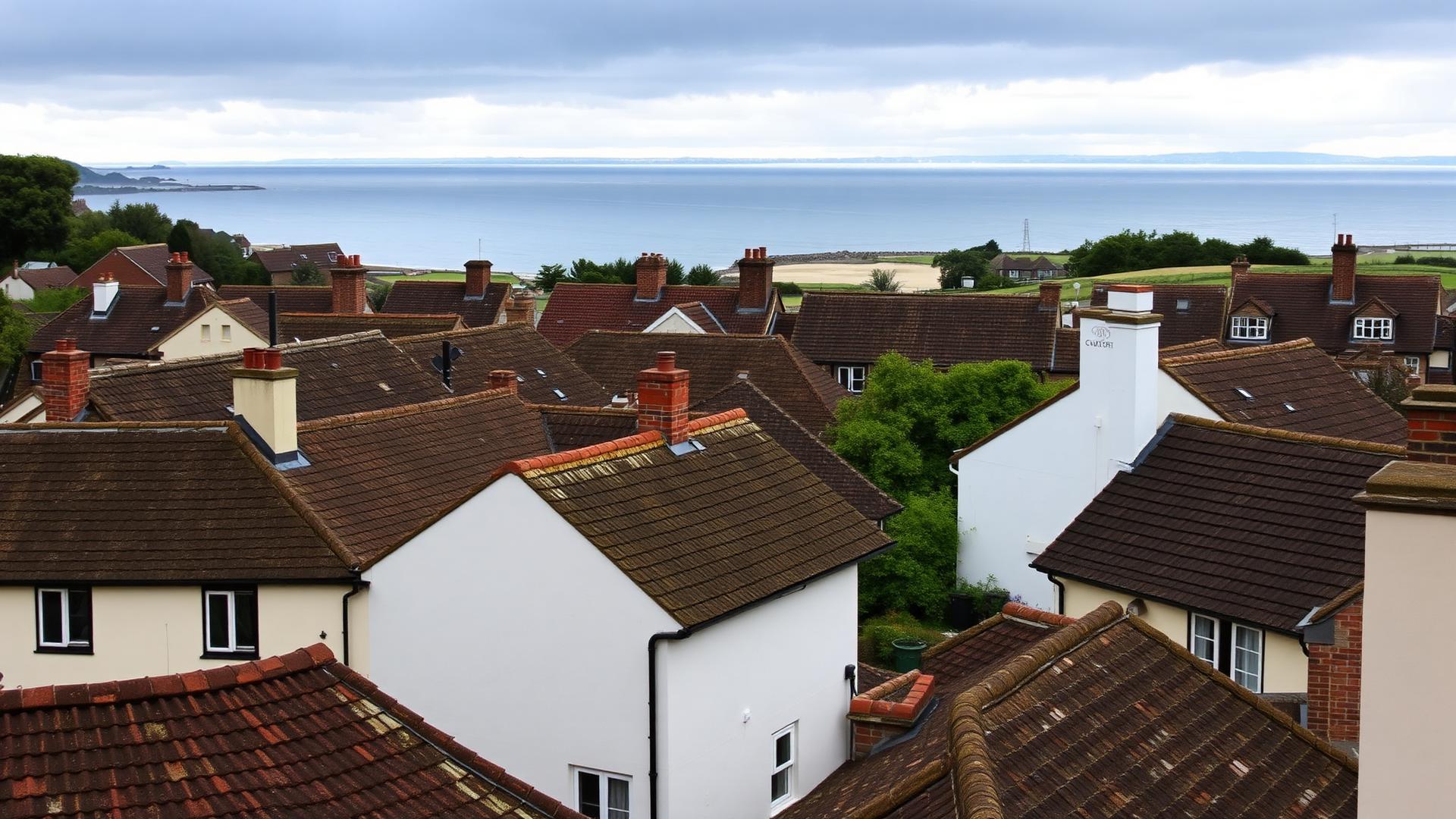
Exposure varies enormously across the county. A seafront property at Weymouth, Swanage or West Bay takes wind loading and salt spray that an inland village near Sturminster Newton never sees, and the failures show it: ridge and verge details go first, then the windward slope can unzip tile by tile.
Fallen branches are the other common cause inland and in the wooded parts of east Dorset. The damage there tends to be localised but deep — a punctured covering with broken battens underneath.
Documentation if you intend to make a claim
Photograph everything, inside and out, as early as you safely can — it's much harder to capture later. Dated photographs, our call-out record and a written description of the make-safe work and the permanent repair can help your insurer or loss adjuster review the incident.
Whether it's covered depends entirely on your own policy, its terms and your excess, so it's worth checking with your insurer before assuming storm damage will be paid for. We provide the documentation either way.
Common questions
What homeowners in Dorset usually want to know about emergency roof repairs.
Ask us anything