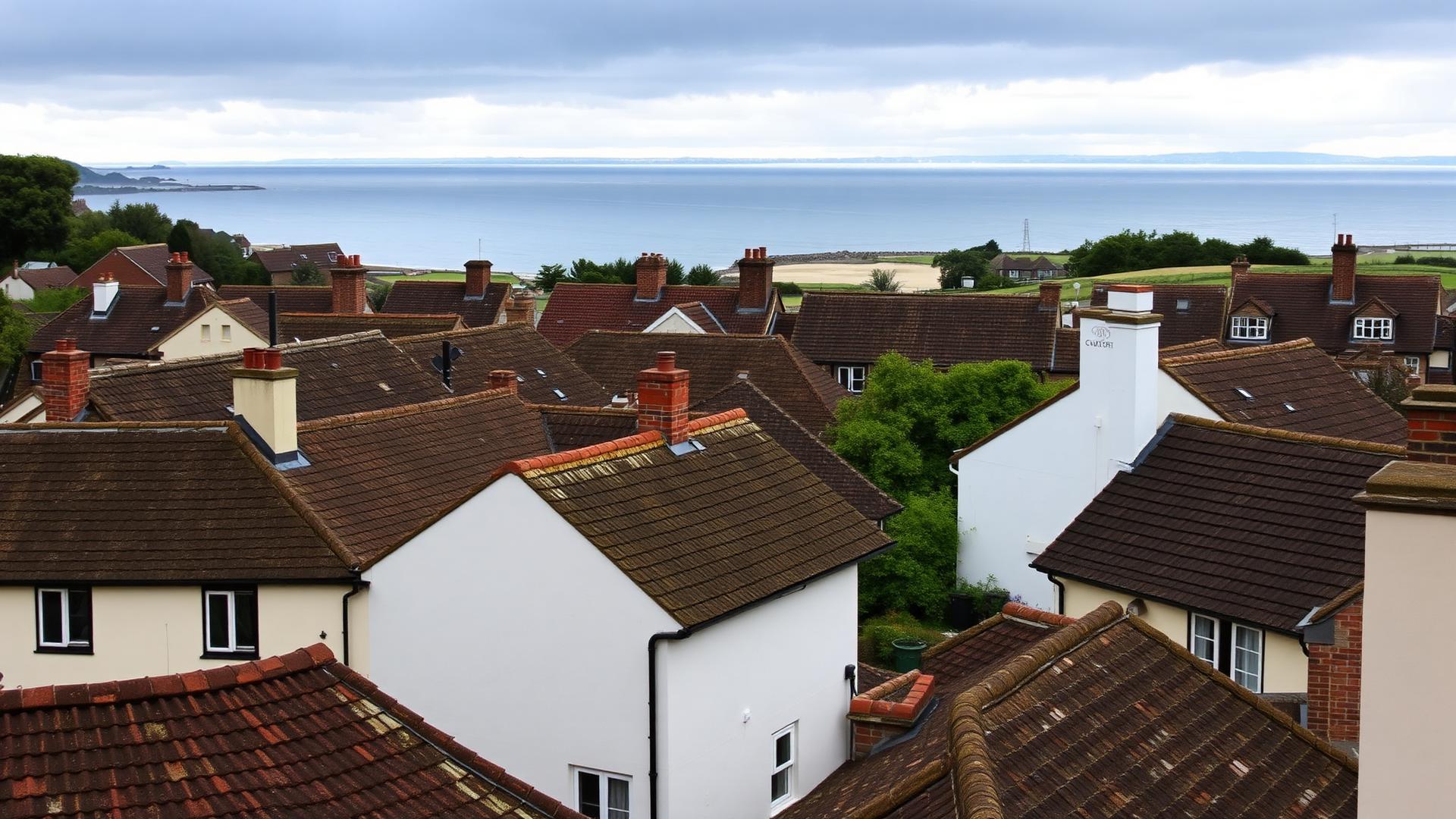
Where the flues are redundant, taking the stack down is often the cheaper long-term answer rather than repeatedly repairing it at height.
Signs a Weymouth stack has had enough
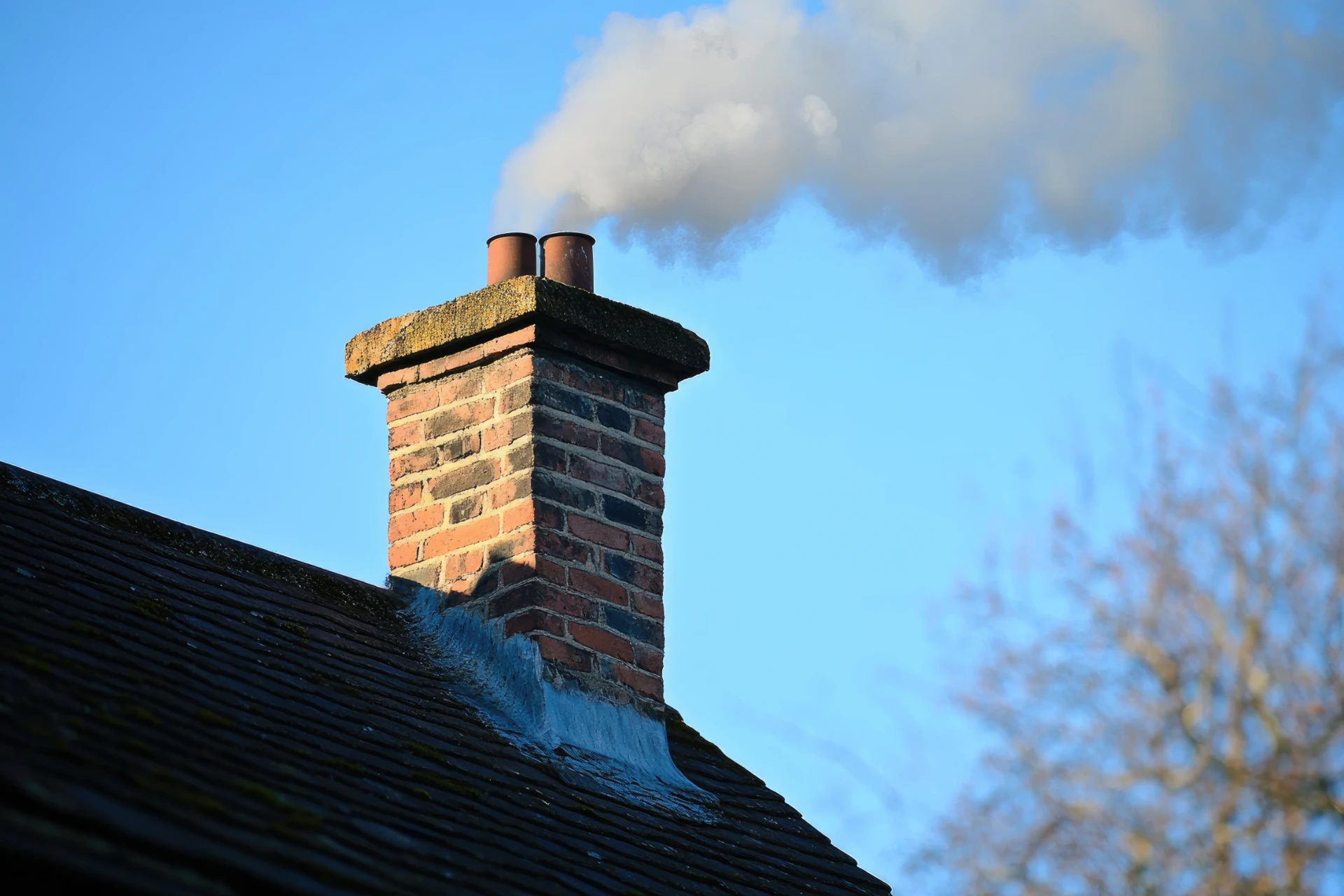
- Pointing scoured out by salt-laden wind on the seaward face
- Flaunching broken and pots visibly out of plumb
- Damp on the breast after every storm, drying slowly between
- Flashing lifted or split where the stack meets the slope
- Heavy spalling on exposed brick faces
- A flue that serves nothing and is capped without ventilation
Three ways the water gets in
Down an open flue, through cracked flaunching at the pots, and through a failed lead-to-brick joint. On an exposed Weymouth roof, wind pressure can push water into all three at once, and it often shows up on the breast well below.
- 1Driven rain gets in at the top of the stack
- 2Cracked flaunching around the pot
- 3Open pointing and spalled brickwork
- 4Water tracks down the flue
- 5Lead flashing — another failure point
- 6Staining shows on the chimney breast below
Partial removal or full removal
Partial removal takes away the exposed section and weathers it over properly, keeping the elevation looking much as it does now. Full removal carries on through the rooms below and needs structural support and making good built into the plan.
Retain & repair
Repoint it, re-flaunch, renew the flashing and cap it off. Keeps the roofline as built, though it does mean ongoing maintenance.
Down to roof line
We take off the exposed section and make the roof good, leaving the breast intact inside. Less disruption, and no internal work.
Full removal
Stack and breast come out completely, with structural support designed in. The biggest job, but it frees up floor space.
Taking it down and making the roof good
We take it down course by course by hand, keep debris under control, cap or remove the flue, support the brickwork, then frame out the roof, dress in the underlay, match the covering and finish with new leadwork.
Access & protection
Scaffold up to the stack, roof and grounds protected, and a debris route planned before a single brick moves.
Take down
We take the stack down course by course rather than pushing it over, lowering brick and pot out safely.
Support & make good
The opening is framed and supported, rafters and battens made up, and underlay dressed in.
Weather the roof
Tiles or slates laid to match, leadwork or a weathered detail finished, so the roof reads as one plane.
Signs a stack is becoming a liability
- Mortar joints washed out and brick faces spalling after repeated frost and salt
- Cracked or missing flaunching around the pots
- A visible lean, or stepped cracking in the stack brickwork
- Damp on a chimney breast that keeps coming back even after the flashing's been renewed
- Debris in the fireplace, or loose material found after a gale
Above-roof takedown
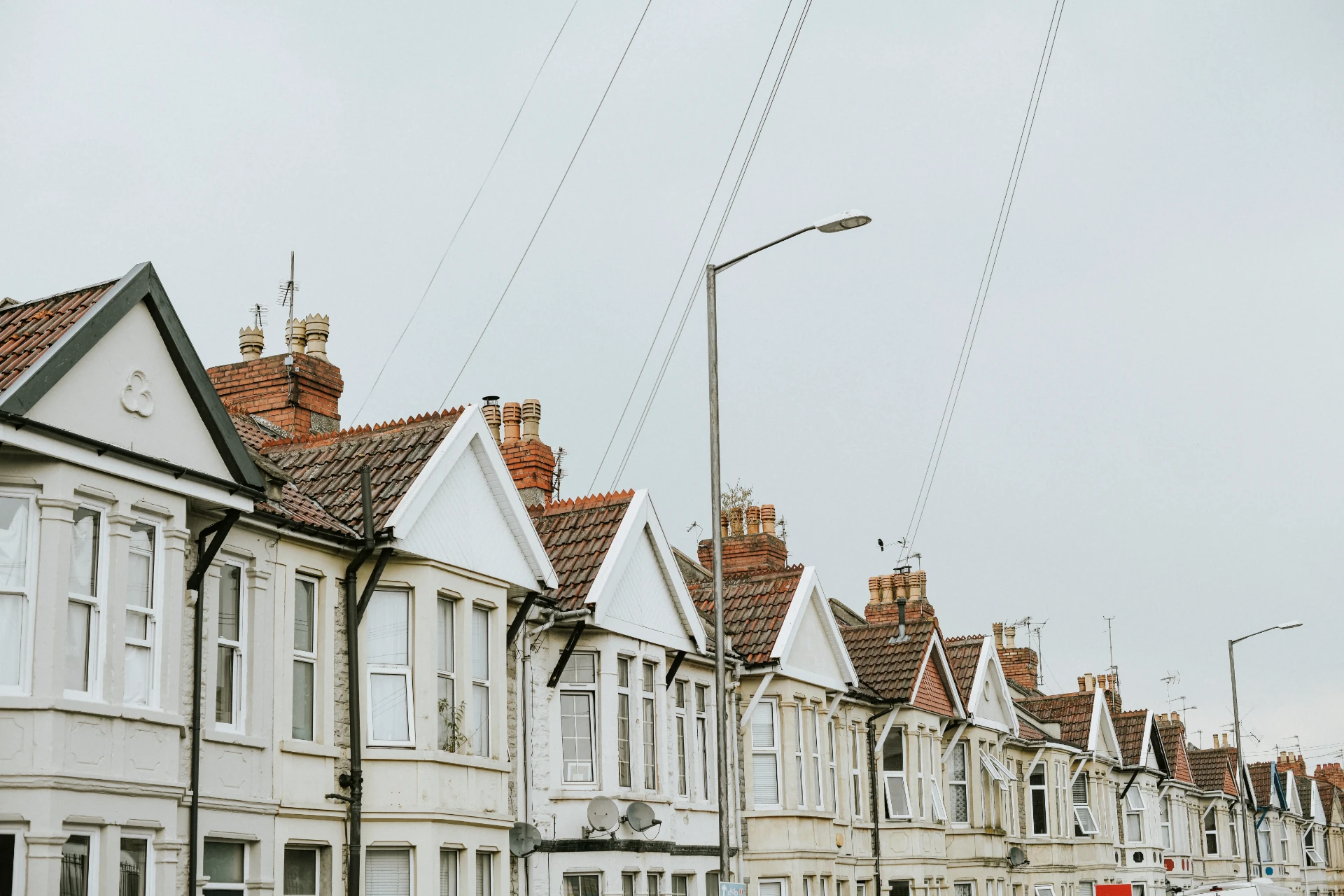
This is the usual approach. Brickwork's taken down to below the covering, the opening's trimmed and supported, and the roof is closed up with matching slate or tile and new lead where needed. On a terrace we keep the roofline continuous, which matters visually on the older Weymouth streets.
Full removal and structural support
Taking a breast out at first floor or ground floor level removes load-bearing masonry, so the remaining structure needs carrying properly — gallows brackets or a beam sized for the job, with building control involved where it applies. It's a bigger undertaking than a stack takedown, and we scope it as such.
Conservation areas
Around the harbour and the older seafront, chimney stacks are often part of the listed or conservation-area character of a street, so removal may not be permitted or might need consent. We'll flag that at survey stage rather than quote you work that could cause problems later on.
Common questions
What homeowners in Weymouth usually want to know about chimney removal.
Ask us anything