
Removing it is a careful, messy job, and it has to leave the roof inspectable, ventilated and in a state a surveyor will sign off.
How to identify the foam in your loft
- A rigid or spongy sprayed layer covering the whole underside of the roof
- No rafters, battens or felt visible to inspect
- Blocked eaves and a loft that feels warmer and damper than it used to
- A buy-to-let remortgage or portfolio valuation held up because of it
- A surveyor or lender objection already received in writing
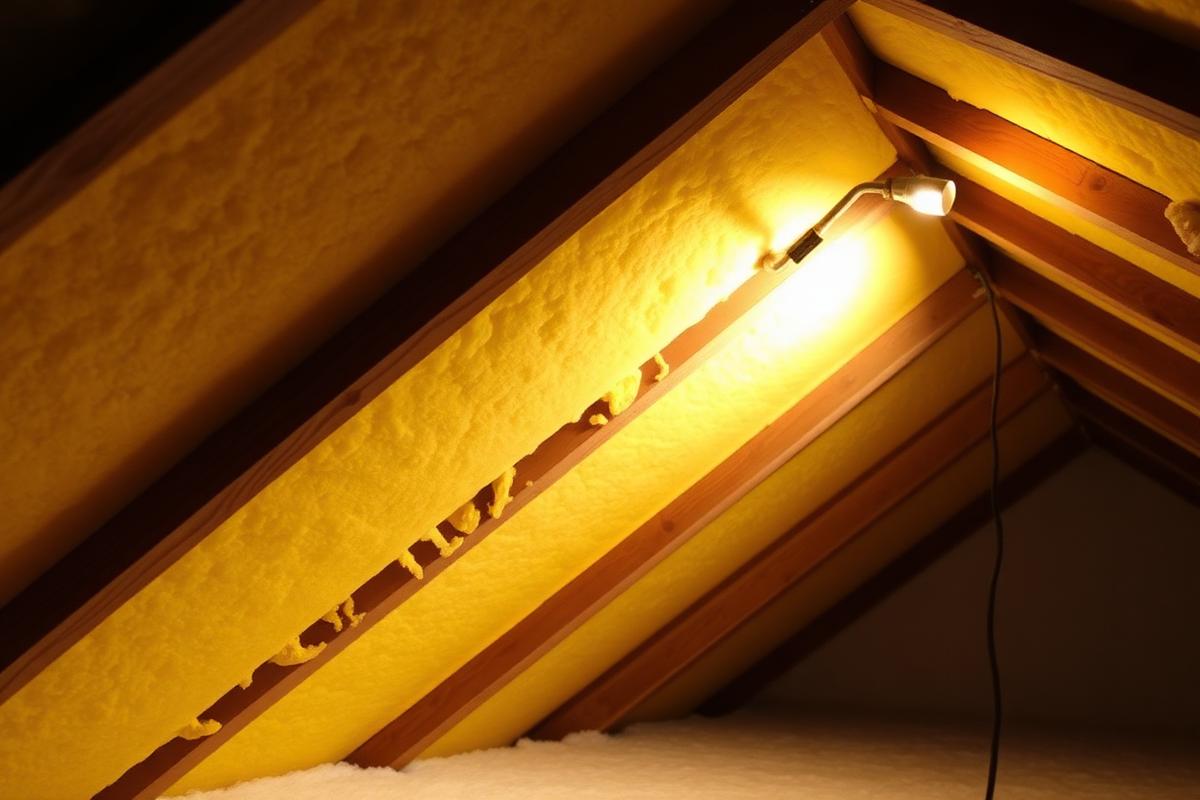
Why it hits Bournemouth landlords hardest
Foam was sold heavily into the town's rental and HMO stock, where the owner rarely goes anywhere near the loft. The problem then surfaces at refinancing, when a valuer can't report on a roof they can't see and the lender declines rather than guesses.
Sealing the slope can reduce the eaves-to-ridge airflow the roof was designed around, while bonded foam can make it harder for timber to dry. The effect depends on the roof build-up and installation.
- 1Spray foam bonded to the underlay, battens and rafters
- 2Eaves ventilation blocked
- 3Moisture held against the timber
- 4Rafters, battens and underlay cannot be inspected
What the removal looks like on a tenanted property
We survey and identify the foam, agree access with tenants, protect the hatch route and rooms below, strip the foam back to bare timber, remove all the waste, photograph the structure and put the ventilation and ceiling-level insulation back.
Loft survey
We check the foam type, thickness and how much timber is bonded, and price it from what's actually there.
Strip out
Foam cut back from the rafters, battens and underlay, with the loft and access route protected throughout.
Timber inspection
Once the structure's exposed, we photograph it so the roof can finally be properly assessed.
Reinstate
Waste removed, ventilation reopened at the eaves, and insulation put back at ceiling level.
Remove, part-strip or leave — compared
Leaving it just pushes the cost onto your next valuation. Part-stripping only really helps where the roof's too fragile for a full removal. Full removal is the option that sorts out inspection and ventilation together.
Leave it
Costs nothing today, but the roof stays hidden and any ventilation or inspection concerns remain to be assessed.
Partial strip
Cheaper, and sometimes it's all that's possible on an awkward roof. Any residue left on the timber will still hide parts of the structure.
Full removal
Removal can expose the timber for inspection and allow ventilation details to be reviewed — and we photograph what was underneath.
Why it causes a problem here
Foam bonded to the underside of the felt and the rafters stops air moving through the roof space. In a coastal town with high humidity that's a condensation problem waiting to happen, and the damage happens inside the timber where nobody can see it — which is exactly why surveyors object to it.
Closed cell foam is the more serious case: it's rigid, sticks hard to timber and felt, and can hold moisture directly against the rafters. Open cell is softer but still blocks inspection and ventilation just the same.
How we strip it out
- Identify the foam type and check how it was applied before quoting
- Sheet and protect the loft hatch, landing and rooms below
- Mechanically remove foam from rafters, purlins and the underside of the felt
- Clean down the timber so the structure can be seen and inspected properly
- Report honestly on any decay, damp or defective membrane we find underneath
- Reinstate ventilation at the eaves and ridge, and clear all the waste from site
What happens after removal
Where the felt has been destroyed by the foam — common with closed cell — the roof needs re-felting, which in practice means re-covering. We'll tell you if that's the case before you commit, not halfway through the job.
Once the roof's clear and ventilated, conventional quilt or board insulation at ceiling level gets the thermal performance back without sealing the structure up again.
Common questions
What homeowners in Bournemouth usually want to know about spray foam insulation removal.
Ask us anything