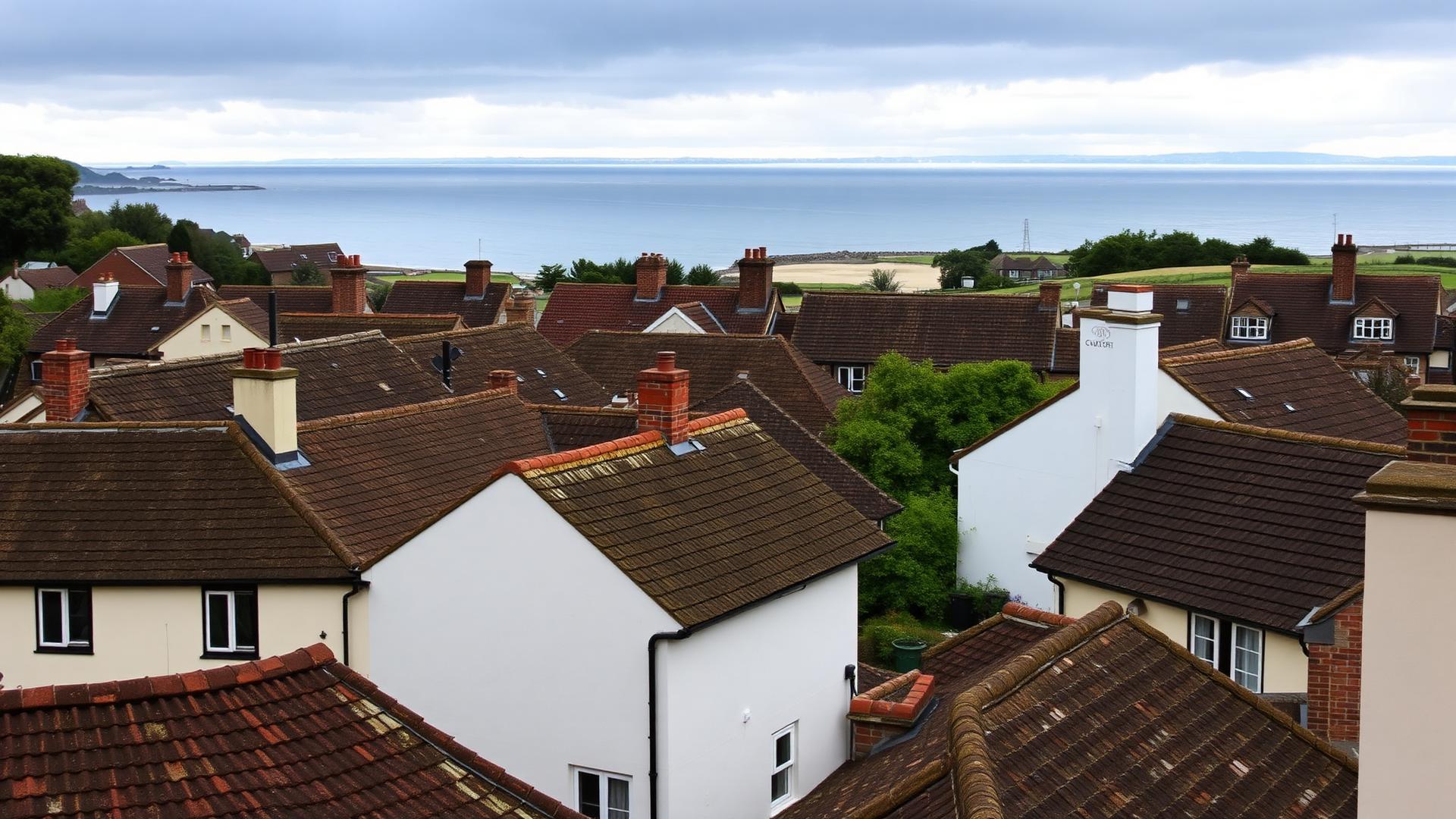
That shapes how we repair here: we look at what is holding the roof down as much as what is on it, and we replace with non-ferrous or stainless material rather than putting the same failure back.
What we find on Poole roofs
- Nail sickness on older slate — sound slate sliding off corroded fixings, elevation by elevation
- Ridge and verge mortar cracked and lifting on harbour-facing slopes
- Corroded clips and rusted valley linings on properties near the water
- Wind-driven rain past flashings at Sandbanks, Lilliput and Hamworthy that would never trouble an inland roof
- Moss and lichen on shaded slopes in Parkstone and Broadstone, lifting tile tails
- Perished eaves felt so water bypasses the gutter and soaks the fascia
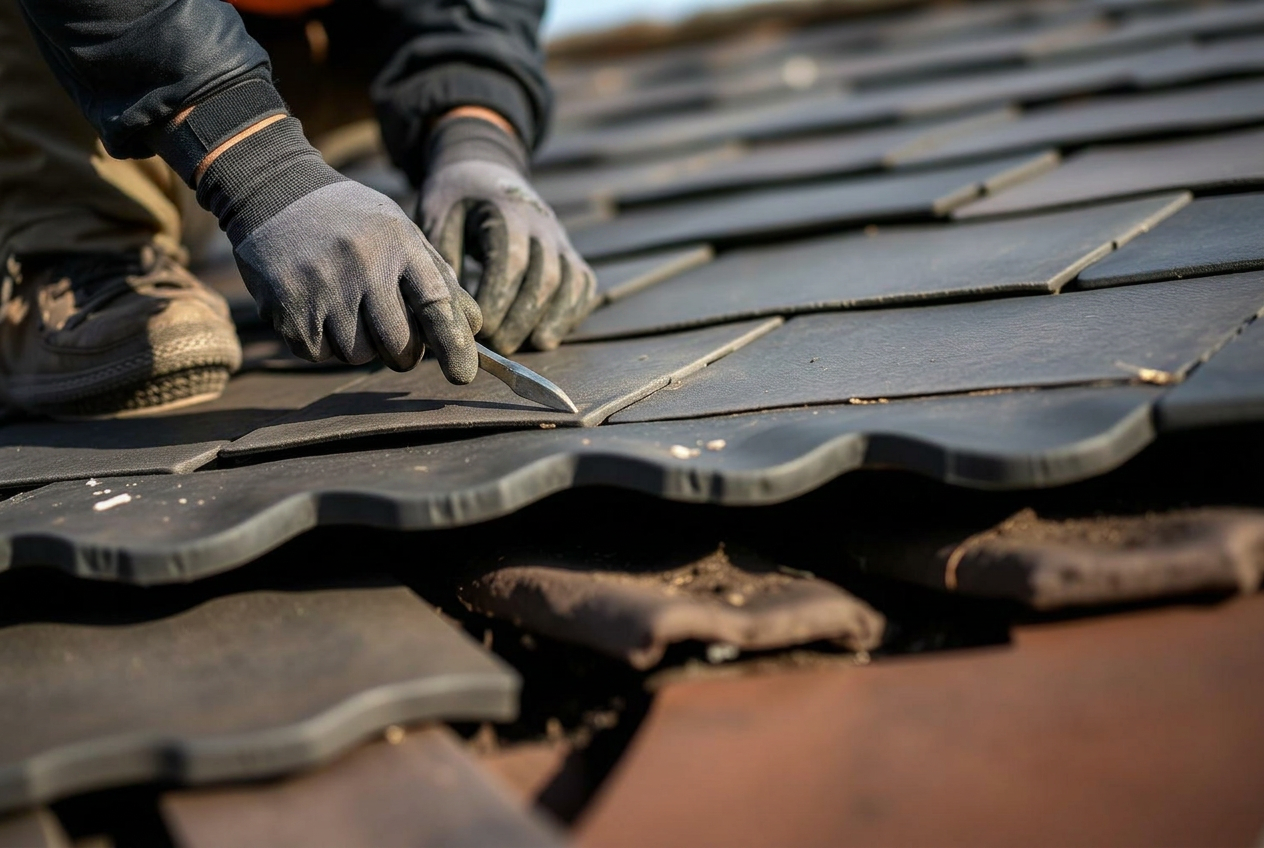
Repairing near the water properly
Marine exposure changes specification, not just workmanship. Stainless steel or copper fixings, mechanically fixed dry ridge and verge rather than mortar alone, code-appropriate lead dressed and clipped so it cannot be lifted by wind, and closer laps on exposed elevations.
It costs a little more per repair and it is the difference between a fix that lasts and one that is back within a couple of winters.
Old Town, conservation areas and heritage coverings
Poole Old Town and the quay carry listed and conservation-area property with clay tile, natural slate and traditional detailing. Repairs there have to be like for like, using reclaimed material where we can salvage or source it, and we will tell you where consent is likely to be needed rather than doing the easy thing and leaving you exposed.
Repair or replace?
On a roof where the fixings have failed generally rather than locally, spot repairs turn into a standing arrangement. We will show you what we are seeing on the fixings and be straight about whether continuing to patch is sensible, because on a salt-exposed roof that decision usually arrives earlier than owners expect.